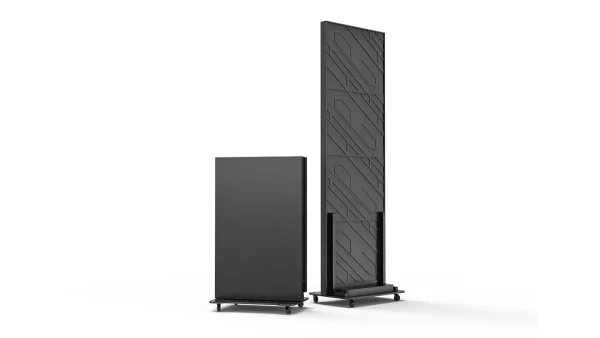
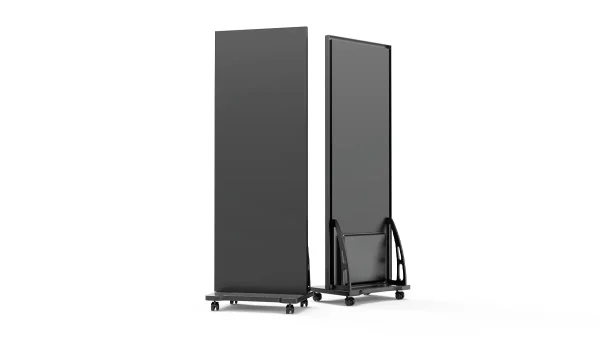
Televisore LED COB All-in-One
  Display a LED flessibili
  Display a LED trasparenti
  Manifesto pubblicitario
  Display LED circolari
  Display LED creativi e personalizzati
 One retail chain saved $3,200 per campaign by swapping printed window signage for LED posters. Here’s the math, the hidden operational savings, and the three questions that determine whether your business should make the switch now or wait.

- For a retail chain updating window signage monthly, switching to LED posters delivers Rimborso in 18 mesi and saves $3,200–$4,800 per campaign across 40 stores — $76,800–$115,200 annually. That’s the print budget paying for the hardware.
- The real ROI isn’t just the print cost saved — it’s the risparmi operativi: no shipping, no installation labor, no storage, no disposal, no misprinted reprints, and zero turnaround time from creative approval to all stores live.
- The digital switch also unlocks revenue that printed signage can’t: same-day campaign launches for flash sales, A/B testing creative across stores in real time, and dynamic content triggered by time, weather, or foot traffic.
- Not every business should switch right now. If you update signage quarterly or less, have fewer than 5 locations, and your stores have no electrical access near windows — printed signage still wins on simplicity and upfront cost.
The Hidden Cost of Printed Signage — It’s Bigger Than the Print Bill
When a business compares “printed signage vs LED poster,” the first number they reach for is the print cost per poster. Large-format window graphics: $80–$120 per store. Vinyl banners: $60–$100. Foam board displays: $30–$60. The print bill looks cheap on paper.
But the print bill is roughly half of the real cost. Every printed campaign also burns money on things nobody puts in a line item: shipping from the print house to each store ($3–$6 per store, per campaign), labor to install and remove the old signage ($20–$40 per store × store manager time), storage for out-of-season prints, disposal costs, and — the most expensive line nobody tracks — the misprinted batch that arrived with a color shift or a typo and needed a $1,200 reprint rush job.
Here’s what a printed signage campaign effettivamente costs for a 40-store retail chain, monthly updates, large-format window graphics:
| Cost Line (Per Campaign, 40 Stores) | Quantità |
|---|---|
| Large-format printing (40 × $85 avg) | $3,400 |
| Shipping print house → 40 stores ($4 avg × 40) | $160 |
| Store manager installation labor (30 min × 40 stores × $25/hr) | $500 |
| Removal and disposal of previous campaign prints | $200 |
| Rush reprints (color shift, typo, damaged in transit — ~5% of campaigns) | $215 |
| True Per-Campaign Cost | $4,475 |
| Monthly campaigns × 12 | $ 53,700 / anno |
| LED Poster alternative (40 × P2.5 Indoor, amortized 5 years, annual) | $ 15,200 / anno |
Annual savings: $38,500 — enough to buy 27 more LED posters. And that’s before counting the revenue generated by same-day campaign launches (Section 04) and the operational time saved (Section 03).
Print vs LED Poster — Per-Campaign Math at Every Scale
Not every business runs 40 stores. Here’s the per-campaign math scaled to single-store, 5-store, and enterprise deployments — so you can see exactly where the ROI line crosses for your operation.
| 1 Conservare | 5 negozi | 10 negozi | 40 negozi | |
|---|---|---|---|---|
| Print cost per campaign | $112 | $560 | $1,119 | $4,475 |
| Annual print cost (monthly updates) | $1,344 | $6,720 | $13,428 | $53,700 |
| LED Poster hardware (P2.5 Indoor, EXW) | $1,400 | $7,000 | $14,000 | $56,000 |
| Amortized annual hardware cost (5 yr) | $280 | $1,400 | $2,800 | $11,200 |
| Annual electricity (12h/day, 365d) | $100 | $500 | $1,000 | $4,000 |
| LED Poster annual TCO | $380 | $1,900 | $3,800 | $15,200 |
| Risparmio annuale | $964 | $4,820 | $9,628 | $38,500 |
| Periodo di rimborso | 17 mesi | 17 mesi | 17 mesi | 17 mesi |
All LED Poster prices are P2.5 Indoor model, EXW Shenzhen. Freight, duties, and one-time VNNOX Cloud setup (~$200 total) are included in the amortized hardware line. Payback assumes monthly print campaign updates. Quarterly updates stretch payback to ~30 months.

The payback period is scale-invariant. Whether 1 store or 40, the relationship between print cost saved and hardware cost invested is linear. One store saves $964/year against a $1,400 investment — 17 months. 40 stores save $38,500/year against $56,000 — also 17 months. The math scales cleanly.
Operational Savings — The Money Your P&L Doesn’t Track
The print-to-digital savings that show up on a spreadsheet are print cost, shipping, and store labor. The savings that non show up on the spreadsheet — but are larger than the ones that do — are the operational friction costs that print introduces into a retail operation.
1. The Turnaround Time Gap — 2–3 Weeks vs Same Day
A printed campaign follows this timeline: creative team finalizes artwork (Day 1) → sends to print house (Day 3) → print house proofs and prints (Day 7–10) → ships to 40 stores (Day 12–16) → store managers receive, unbox, and install (Day 16–22). Three weeks from creative approval to all stores live.
An LED poster campaign on VNNOX Cloud: creative team finalizes artwork → uploads to dashboard → clicks “push to all stores.” Same day. All 40 stores. Zero shipping. Zero store manager time.
What’s three weeks of lead time worth? For a fashion retailer launching a seasonal collection, being three weeks late means missing the first wave of customer interest. For an electronics retailer with a competitor’s flash sale, three weeks means the sale is over before your response campaign launches. Printed signage’s lead time isn’t a cost — it’s a svantaggio competitivo that LED eliminates.
2. The Version Control Nightmare
Printed campaigns ship physical objects. The print that arrives at Store 7 might be from a different batch than Store 23 — different color calibration, slightly different crop, paper stock substitution. If the creative team catches an error after the print run starts, the cost of reprinting 40 units is $3,400. Half the time, the error ships anyway. With LED, a creative error is fixed by uploading a corrected file — zero reprint cost, zero shipping, zero delay.
3. Storage, Disposal, and the Print Graveyard
Every printed campaign has a physical afterlife. Out-of-season prints stack up in back rooms. And disposal: large-format prints can’t go in standard recycling. Vinyl banners are PVC — not biodegradable, not curbside recyclable. 40 stores × 12 campaigns/year × 1 large-format print per campaign = 480 prints per year going to landfill. For corporate ESG reporting, the print-to-LED transition is a measurable sustainability win.
If your business has a dedicated person — or team — whose job includes “coordinate store signage rollout,” switching to LED poster plus VNNOX Cloud eliminates that role or frees it for higher-value work. At 10+ stores with monthly updates, the operational overhead alone justifies the hardware investment, even before counting the print savings.
The Revenue Side — What LED Posters Enable That Print Can’t
Saving money is half the ROI story. Generating new revenue that was structurally impossible with print is the other half — and it’s the half most ROI analyses miss.
Same-Day Campaign Launches — The Flash Sale Multiplier
A competitor drops prices Friday morning. With print, your response campaign reaches stores in 2–3 weeks. With LED, your response campaign reaches all stores venerdì pomeriggio. For a retailer doing $2,000/day per store in foot traffic, losing three weeks of competitive response across 40 stores is $1.68 million in revenue at risk — not lost revenue, but revenue that a same-day digital response could have captured. Even capturing 5% of that through better-timed promotions, that’s $84,000 in incremental annual revenue — more than the cost of the entire LED poster deployment.
A/B Testing Across Stores — Print Can’t Do This
With printed signage, every store gets the same creative. There’s no way to test whether a red “SALE” banner outperforms a blue one. With LED posters and VNNOX Cloud, you can push Variant A to 20 stores and Variant B to the other 20, measure in-store traffic or sales lift over two weeks, and standardize on the winner.
Time/Weather/Event-Triggered Content
A printed sign is static. An LED poster can change automatically: “Happy Hour Starts Now” at 4 PM, “Good Morning” at 7 AM, “Umbrellas 20% Off” when the weather API detects rain. The conversion lift from context-relevant content vs generic brand messaging: 15–25% higher engagement.
Motion Attracts Attention — Print Sits Still
A printed window graphic catches the eye once. A looping 30-second LED poster video catches the eye continuously. Digital window displays generated 41% higher dwell time and 23% higher store entry rate compared to static printed signage of the same size and location.
Send us your store count, campaign frequency, and average print cost. We’ll send back a customized 5-year ROI projection within 24 hours.
Five-Year P&L — Print vs LED Poster, 40 Stores
Below is the five-year profit-and-loss comparison for a 40-store retail chain — monthly campaigns, large-format window signage, P2.5 Indoor LED Poster as the digital alternative.
| Anno | Segnaletica stampata | Poster LED | Risparmio cumulativo |
|---|---|---|---|
| Anno 1 | $53,700 | $71,200 | −$17,500 (investment year) |
| Anno 2 | $53,700 | $4,000 | +$32,200 (recovered + ahead) |
| Anno 3 | $53,700 | $4,000 | + $ 81,900 |
| Anno 4 | $53,700 | $4,000 | + $ 131,600 |
| Anno 5 | $53,700 | $4,000 | + $ 181,300 |
| Totale 5 anni | $268,500 | $87,200 | $ 181,300 risparmiati |
$181,300 saved over five years — 67% lower cost than printed signage.
Real Case: 40-Store US Retail Chain — From Print to LED in 6 Weeks
The numbers above aren’t projections — they’re based on an actual deployment. A US retail chain with 40 locations switched from printed window signage to DOIT VISION P2 Indoor LED posters.
Before — The Print Operation
- Campaign frequency: Monthly (12× per year) + seasonal (4× additional)
- Per-campaign cost: $4,475 (print + ship + install + disposal + reprint contingency)
- Annual print spend: $53,700
- Tempo di consegna: 3 weeks from creative approval to all stores displaying
- Punto dolente: Store managers spent ~4 hours/month on signage — not selling.
After — The LED Poster Operation
- Hardware deployed: 40 × P2 Indoor LED Poster
- Gestione dei contenuti: VNNOX Cloud — one dashboard, push to all 40 stores simultaneously
- Tempo di consegna: Same day — creative final to all stores live in under 4 hours
- Store manager time: Zero. Posters are always on, content updates happen remotely.
The Results — 12 Months In
| Metrico | Risultato |
|---|---|
| Campaign turnaround | 3 weeks → same day |
| Campaigns per year | 12 → 26 (doubled frequency, no incremental cost) |
| Store manager time saved | ~2,000 hours/year (~$50,000 in labor reallocation) |
| Print errors (reprints, color shift) | ~6 incidents/year → 0 |
| Problemi hardware | 0 dead pixels, 0 returns in 12 months |
| Finanziari | Payback achieved in 18 months |
Read the full case study with deployment photos and store-by-store rollout timeline →
Should Your Business Switch Now — or Wait?
LED posters are a positive-ROI investment for most multi-location retail operations. But “most” isn’t “all.” Here’s a clear framework.
Switch Now If:
- You update signage monthly or more.
- You have 5+ locations.
- Your stores have electrical access near windows.
- Your competitors are already digital.
- You plan to be in business 3+ more years.
Wait If:
- You update signage quarterly or less.
- You have fewer than 3 locations.
- Your window real estate is small or irregular.
- Your store environment has no internet connectivity.
The lowest-risk path: deploy 2–3 LED posters in your highest-traffic stores for one quarter. Measure print cost saved, store manager time recovered, and foot traffic lift. The pilot costs $2,800–$4,200 in hardware and gives you real data for the board-level business case.
Tell us your store count, campaign frequency, and average print cost per store. We’ll send you a customized ROI projection.